Your Cart is Empty



Afghan Turquoise and the Theatre of Tiny Ascidians
Sometimes the seabed stops looking like geology and starts looking like theatre. A red sponge becomes the stage, while tiny, minion-like ascidians — some barely 3 millimetres across — cluster like curious spectators, their turquoise-rimmed openings flashing against the sediment in that irresistible red-green, turquoisey visual collision.
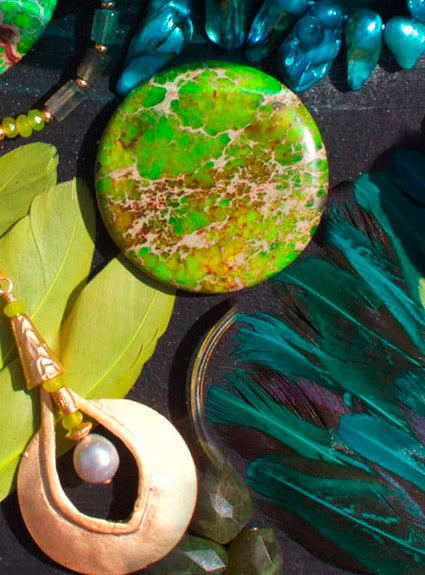
That chromatic jolt had been waiting for its counterpart for years. Hidden in my drawer, untouched for almost fifteen years, were extraordinarily rare turquoise tassels from Afghanistan — the kind of material you don’t simply use, but eventually surrender to the right idea.
Here, those tassels finally found their logic. Their tiny beads mirror the precise dotted rhythm of the ascidian openings, translating biology into movement, colour into fluidity. Stretching to a deliberate 10 centimetres, the length is not indulgence but necessity: it allows the turquoise strands to move like water, to breathe rather than hang.
The reds are anchored with pearls, agates, and tiny garnets, all set into 22-carat gold-plated brass, forming a controlled tension between warmth and coolness, structure and flow.
The result feels kinetic, luminous, quietly extravagant — jewellery that doesn’t imitate the reef, but carries its visual electricity into entirely human space. ✨